What’s in a Name?

images

I remember a poignant scene from the movie What’s Love Got to Do With It? where Tina Turner is divorcing Ike Turner and she’s willing to give up everything as long as she gets to keep her name.  All I want is my name, she said proudly.  Her name meant more to her than all her riches or her royalties.  I sat there watching this scene thinking would I do that?  Would I give up everything for my name?

Recently, I had dinner with a friend who has his family crest tattooed on his forearm.  His family name proudly scripted in large letters above the shield.  Inked in a visible place, his crest demands attention.  He tells me if his older brother didn’t have a son, the family name, the one emblazoned on his skin, would be lost.  It’s up to the son to pass on the name.  Such pressure on this child, I thought.  The burden of a family lineage resting on his shoulders.  What if he turns out like me?  Someone who is willing to change his name to assimilate and blend in.  If I have to attend an event where I have to wear a name tag, I spell my name Lee minus my last name.  I am transformed into a one-word name like Elvis or Sting. The transition to becoming Lee, an American who grew up in the south, who graduated with a Biology degree, who enjoys living by the beach, is easy.  It’s more difficult to be Ly, an immigrant from Vietnam who struggled to  learn English, who rounded his eyes in the mirror, who tried to change his name.

I think about my mother whose maiden name I didn’t learn until I had to use it while filling out paperwork for my first loan.  When she got married, her name dissolved, like sugar in hot tea, into my father’s.  For nearly fifty years, no one  called her by her first name.  Even her own mother opted to call her ma lan or mother.  Many years later, when she left my father to live with me, I was caught off-guard when my neighbors greeted my mother by her first name.  I’ll admit that I was surprised, if not a little angry, when she acknowledged her name.  In my mind, that name didn’t exist except only on paper.  I realized, all those years, I never connected my mother to her name, never saw her as an individual, a separate entity apart from my father or my family.  When my neighbors said her name out loud, I stopped in mid-step, my auditory senses triggering my visual ones and an independent woman appeared, someone completely different from the woman who raised me.  Her name, one I didn’t even think she would even recognize, suddenly took form.  What dawned on me was that there was no way my neighbors could have known her name unless she told them.  They must have asked her what her name was and she must have replied, Gam, pronounced like gum but with an accent.

My name is Gam, I imagined her saying in her staccato English.  It’s almost inconceivable that she could ever express such words.  But she had to and by the looks of her exuberant behavior, it was something she has wanted to do for a long time.  Reclaiming her name, after so many years of denying or hiding it, has brought about an unbelievable change, imagine Lynda Carter spinning as she transforms into Wonder Woman, only not as fast.  The pride she feels in her name is infectious.  Well, almost.  Can I say I have the same amount of pride newly discovered by my mother?  I can honestly say I don’t know.  I have accepted my name and have grown to appreciate its uniqueness but I still don’t correct people when they spell my name Lee.  I let them discover the correct spelling on their own.  The reaction is always the same, Oh, I didn’t know you spell your name L-Y. I would smile, not offering much of a defense.  Perhaps I have to lose it, like my mother did, to know the value of it.  Then maybe and that’s a big maybe, I would even have the courage to tattoo it on my arm. ip address
Toilet Humor

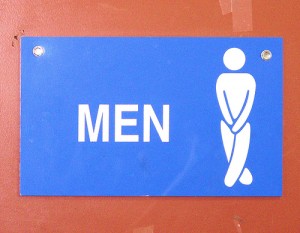
700090074_ad34a8a96fAfter many years of self-employment, it’s been hard to go back to work in a corporate environment.  I’m no longer my own boss, my privacy (if any) is restricted when I’m at the office, looming deadlines lurk behind every project and of course, I have to deal with the myriad of personalities, mood swings and turf wars from various co-workers.  It has been quite the adjustment.  But the biggest challenge for me has been something totally unexpected.  It’s not something that most people think about but it’s something, unfortunately, I can’t avoid: the men’s restroom.  You’re probably thinking this time my thoughts have really gone down the toilet, if only that was true.

When I owned my coffee shop, I had single bathrooms so I didn’t have to worry about the company of other men during my private moments.  Of course, the same was true when I worked at home.  I think most of us would agree that when it comes to using the bathroom, we prefer to be in solitary confinement.

I have friends who avoid using the restroom at work.  They wait until they get home or search for single bathrooms.  Some have privacy issues while others cite sanitary ones.  It’s a big deal for them and only recently, I can see why.

I know that there are big, if not capacious, differences between men and women when it comes to toilet etiquette.  Some may disagree but men, for the most part, have little etiquette, if any at all.  As a man who now has to use a bathroom shared by at least fifty other men, I can testify to the lack of consideration.  Let me clarify, I work in a professional office and the bathroom is on the second floor.  It’s not a truck stop or a gas station john that’s only accessible with a key attached to a plank of wood or a used hubcap.  It’s a large bathroom with three stalls and three urinals.  A bank of faucets lines the opposite wall underneath a large one-piece glass mirror.  All in all, a decent bathroom.

Some women may find similarities in some of my observations but most I have spoken to agree that women are quite reserved when they are using the bathroom.  They prefer not to be seen or heard if all possible.  Here lies the biggest difference: men are very vocal when they are using the bathroom.  When I say vocal, I’m not talking about conversations in between stalls or on the phone but exclamations or orgasmic yelps such as Oh My God!, Fuck!, Wow! or I Can’t Believe That!  These are just some of the exultations I have heard.  Each time I have to suppress a snicker, if not an outright guffaw.  What are these men thinking and what kind of bathroom experience are they having?  It’s as ridiculous as those Herbal Essence’s commercials.  For those men who can’t control their excitement, here’s my advice: Learn.  Most men are not keen on sharing this experience with you.

Secondly, men, it seems, must get bored very quickly.  Evidence of this is the plethora of newspapers, magazines and brochures that sometimes line the bathroom floor.  Men bring in reading material when they know they’ll be occupied for some time.  That’s understandable.  But what I don’t understand is that they leave this stuff scattered all over the floor.  With the aim or more appropriately, the lack of one, of some of these men, I can see why some want to put newspapers down but the problem is that the stench of soiled newspapers is quite atrocious.  Imagine the smell of newspapers that have been slept upon by a homeless person who has not bathed in a couple of weeks.  Yea, you get the picture.

Thirdly, men with all their ingenuity have a hard time comprehending one word:  Flush.  More often than not, men like to leave behind presents.  Trust me when I say, it’s not a gift I, or anybody else, wants to receive.  If you don’t want to touch the handle, use your foot.  It’s not difficult.  I cannot begin to comprehend why someone would think not flushing would be appropriate.  It also makes me wonder if they do this in public, what stockpile they are hoarding at home.

Lastly and this is probably the most puzzling, why men throw trash in the urinals.  I have seen gum, candy wrappers, paper towels, mints, combs and yes, even tooth brushes.  The item bobbles up and down helplessly in the vortex caused by a flush, unable to penetrate the plastic guard that usually houses a large scent tablet.  Anybody can see that these items would never flush down the drain, yet men, continue to dispose of garbage in these urinals.  What also makes me fume is the fact that a trashcan is not even a foot away.  I don’t know if it’s because men are lazy or immature, but whatever the reason, it’s stupid.

I know I can’t stop using the office bathroom. I don’t have the ability to hold it like some of my more skillful friends.  The only thing I can do is to treat it like an expedition to an uncivilized country and to do what all explorers have learned to do:  expect the unexpected.

Life and Death: The Vietnamese Way

260xStory

Asians, especially Vietnamese, are very peculiar about the notions and perspectives surrounding death.  For example, I was shocked to discover that Americans and perhaps, most citizens of the Western world do not photograph funerals or wakes.  It never occurred to me that this might be considered odd or at the very least, morbid until a friend was completely shocked when I showed him pictures of my grandmother’s funeral.

Why would you take pictures at a funeral? he asked, shaking his head in disbelief.

Why would you not? I indignantly retorted back.

I’ll have to admit, weddings, funerals or any large get-togethers give my family an opportunity to use our cameras.  Constant picture taking has strengthened our index finger to the point that it is second nature for us to press down on any shiny metallic button.  In fact, our picture-taking reflex is almost autonomical like blinking or breathing.

Growing up, my family used to receive pictures from funeral services of relatives in Vietnam.  The pictures were usually the same: black and white photos of relatives standing over graves or caskets looking grim and sullen.  On occasion, the accompanied letter would sometimes describe grief stricken family members trying to crawl in the casket of the deceased.  Whenever we got those letters, it would always spark a debate among the children as who in the family would be the casket crawler. Somehow I was always chosen being that I have a flair for the dramatics.

When my family got these funeral photos, we didn’t flinch or wince.  To us, morosely, it was like receiving a postcard but instead of saying, Wish you were here, ours would say, Wish your uncle was alive or Wish your cousin was here to enjoy this.

Vietnam is not only physically on the opposite side of the world from America, it’s also its philosophical opposite.  Most funeral services in America consist of mourners wearing black attire.  Men dressed in black suits and dark ties, women in black dresses and the occasional black veil.  Traditional Vietnamese funerals are contrastingly different.  If you ever walked in on one, you would probably stop dead in your tracks (no pun intended).

The most striking contrast is that Vietnamese mourners do not wear black: we wear white.  Well, I should clarify: the immediate family of the deceased wears white.  While Americans traditionally view white with weddings, Vietnamese associate white with funerals.  Red is the color of choice for weddings as it represents prosperity and luck, while white represents loss and a passing of life.  The color white symbolically represents the ashes of the deceased.  Since most Asians are cremated, it’s more appropriate for funerals than black.

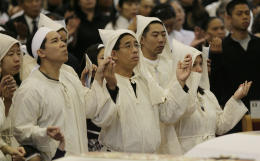
When you attend a Vietnamese funeral, you’ll notice the deceased’s immediate family is sitting or kneeling in close proximity to the casket.  However, it is not the close distance that immediately draws your eyes but the traditional mourning regalia: white robes, pants and pointed hoods.

The outfit consists of white pants that billow out like over-sized pajama pants, a white wrap-around tunic that makes anybody who wears it a Samurai double and last, but not least, a white, pointed hood.  The hood is simple in design, two pieces of white cloth sewn together to form a pointed end, long enough to cover the neck but exposed in the front to show the mourner’s face.

Unfortunately, when I mention white, pointed hoods, it conjures images of the Klu Klux Klan.  However, the biggest difference is that Vietnamese are not ashamed to show our faces. Amazing how iconic a white hood is in American society that it immediately evokes feelings of hatred and animosity.  Asians view a white hood as sorrow and loss.  I guess, by the same token, Americans probably feel the same.

To Americans, talking about death is taboo but to my family, it’s connecting a duality.  Death is just as much a part of life as is the reverse, a delicate interwoven tapestry.  There is a balance as fine as a silk thread that has long been revered by us.  When we take pictures of funerals or wakes, it’s not to be macabre but more like a quiet reverence.  The pictures show the deceased was just as important in death as when they were alive.  When we are older and our memories begin to fail, we are comforted knowing that we have our pictures to show us the full panoramic view of our loved one’s life.

Hunger of Memory

14531604

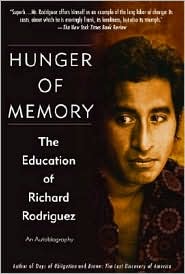
In his autobiography, Hunger of Memory, Richard Rodriguez breaks away from the expected conventional structure of an autobiography and instead weaves brilliant essays involving the subjects of education, assimilation, family and religion.  The title of his book, at first blush, suggests an intimate discourse in the retrieval of his memories but as the book unfolds, the main focus turns out to be more about cultural identity and alienation.

At first, I was a little stilted when I realized his autobiography was in the form of essays.  It was unexpected.  After reading Woiwode’s What I Think I Did, I was anticipating another narrative on the permeability of memories but Rodriguez chose to concentrate on the impact of cultural identity rather than what we remember or can’t remember.  Initially, I thought the essay structure was a brilliant. Since Rodriguez is a true intellectual with profound abstract thinking, the essays fit snugly into his complex style of writing.  The essays have an academic bent to them. Each chapter reads like a journal article from a scholarly magazine. The book, for the most part, lays out the foundation of Rodriguez’s societal, cultural and political beliefs.  He does write about childhood memories and experiences in his youth but each memory is self-serving to the chapter’s topic.  So in that regard, Rodriguez successfully conveys his points of view in an honest and objectified manner.  And it is in this objectification that presents a problem for me.  I feel the essay format is good to convey information and ideas but for a memoir, I thought the effect, over-all, was cold and lacked any intimacy.  While reading, I felt like I was a student in one of his lectures and he was using stories from his past to help further the theme of the lecture.  The stories were used as tools rather than centerpieces for the book.  It was too pragmatic.  The chapters felt distilled and disconnected.  Once I took out the brief and intermittent stories about his past, I was left with pages filled with intellectual ramblings.

After I digested his unconventional format, I was able to applaud his singular concentration to one topic and following it through.  At the end of every chapter, I knew where he stood on certain issues and how he arrived at his conclusions.  Everything he wrote served a purpose.  I paid attention to what stories Rodriguez used, how he wrote and the manner in which he wrote.  In writing this autobiography, I am actually describing the man I have become — the man in the present.  (p.190)

There is one section in the chapter, Achievement of Desire, I found peculiar.  Rodriguez switches from first person narrative to third person narrative.  While reading this chapter, I was often lost to whose voice I was reading about.  I didn’t know if the voice belonged to Rodriguez or Richard Hoggart, a modern educational theorist.  The switch takes place after the first excerpt of Hoggart’s description of the scholarship boy.  There were numerous times I couldn’t distinguish Rodriguez’s voice from Hoggart’s profile of the scholarship boy.  All of a sudden, both merged and became one voice.  I believe Rodriguez wanted to show the reader how much he identified with this profile.  He chose to do so by allowing Hoggart to speak for him.  The effect was startling but the reader gradually understands how Rodriguez intensely identified with the scholarship boy.  However, the abrupt manner in which he switches voice was awkward and confusing.

There were numerous times in this book where I felt Rodriguez was writing about my life.  Although a lot of his writing was in the abstract, he wrote about issues that affect most immigrants.  We deal with the issues of language and sounds, skin color, familial ties and alienation.  I know that I plan to write about these issues as well but I found Rodriguez’s take on them opened new viewpoints for me.

In his first chapter, Aria, Rodriguez starts off by the Anglicization of his name. I heard her sound out: Rich-heard Road-ree-guess. (p.9)  I read this part and couldn’t contain myself.  I don’t know how many times my name has been butchered.  But Rodriguez treats language as more than just incomprehension, he redefines our understanding of language as two parts: public and private.  Rodriguez manages to take language and break it down to empirical components such as sound and syntax.  From there, he expands on the emotional attachments to language and how it connects us to our families as well as our world.

The chapter on complexion was beautiful written.  His thoughts and the cultural biases towards dark skin are universal.  I felt that he was writing about my culture.  Rodriguez wrote about a time he overheard women talking about the misfortune of having dark skin and the gratitude that their children were light-skinned.  The way the women spoke, it seemed that dark-skinned children were afflicted with some kind of cancer.  He could have opted to personally describe his dark skin by inserting stories from his past, but instead he allowed the women, in particular, mothers, to describe the stigma of being dark-skinned.  This was much more powerful.  By using others to convey the bias towards dark skin, Rodriguez shows the reader the cultural perception of anyone suffering from dark skin.   The way he managed to weave the issue of dark skin into a narrative helped me to understand how I can achieve the same powerful effect in my own writing.

Overall, I thought Rodriguez autobiography was stunning and his writing is stylistic and impressive.  The times I enjoyed the book the most was when he would write about his childhood stories and relate them to the chapter’s topic.  When he would detour and got on his soapbox and start pontificating about his political views, I lost all interest.  He sounded egotistical and elitist.  With that said, I learned a great deal from his writing ability and the manner in which he engages the reader.

Fashion Statement

Photo 154My office, the other day, had the air-conditioning set so low, my piping hot coffee was tepid within minutes.  Normally, it would take a good thirty minutes before it was cool enough to drink.  The office, typical of many offices, is composed of different body types as well as varying body temperatures.  The thermostat is usually set at a decent temperature.  But on this day, it seemed nobody, except for me, was concerned about the arctic conditions.  Fending for myself, I tried everything to warm up: blowing on my hands, putting on a jacket, holding a cup of hot coffee or tea and going outside.  I think that was where it all started: going outside.  Living in Florida during the summer is to know hot and not just hot, but what I call Serengeti hot.  It wouldn’t surprise me to see wildebeests, zebras and gazelles roving by.  So when I went outside, I went from the extreme cold to the extreme hot.  My body didn’t react well and suddenly it was caught in a quagmire:  whether to sweat or to shiver.  My body couldn’t decide so I started to shiver sweat.  Then I began to feel congested.  The pressure in my head rising by the minute.  I felt as if my head was being held underwater.   The prognosis wasn’t good and sure enough, I started to sneeze, my nose became runny, my eyes began to water, a migraine was slowing being born in the back of my head.  It got so bad I had to leave work early.  I came home and immediately popped a Benedryl.  I was knocked out for the next couple of hours.  The night didn’t bode well as I was up sneezing, sniffling, aching, congested and yea you guessed it, stuffy-head so I couldn’t sleep.  I called out sick the next day.
I returned to work the day after.  This time I came prepared – my neck was swathed in a scarf.  It’s not a heavy scarf but one of those scarves that is light and gauzy.  The type that you have to tightly twist before you throw it in the dryer.  My scarf is brown with purple and red horizontal stripes near the frayed ends.  I consider it very fashionable, after-all, I got it at an H&M department store.

So I walked into the office and immediately some heads turned.  Yes, I did realize it was a little unusual for someone to wear a scarf while the outside temperature index was plus 90 something degrees.  But I didn’t care, I didn’t’ want to be sick again.  I sat at my desk but I couldn’t shake the stares I received from my co-workers.  I walked over to my friend’s desk and asked him if there was something wrong with my scarf.

Ummm…you look gay, he told me.

No I don’t, I replied.

Ummm…ok, he said.

I returned back to my seat and remembered the last time I wore this scarf, two lesbian friends said the same thing.  I didn’t believe them either.  It’s a scarf for Pete’s sake.  Scarves don’t make you gay.  Come to find out scarves don’t make you gay – they just make you look gay.

In this day of age where metro-sexuality is rampant, it’s hard to tell who is gay and who isn’t.  Straight guys wax their eyebrows, get manicures and pedicures, shave their legs and arms, get ripped and have fashionable haircuts.  All those qualities used to be associated with gay guys.  I know I’m over-generalizing (I have many gay friends who are complete slobs with their appearances), but for the most part, this generalization holds true.  It doesn’t matter to me one way or the other.  What matters is that a person is comfortable in his own skin or in this case, his scarf.

I wore the scarf, not to make a sexual statement, but to combat a cold or the return of a cold.  If I had gloves I would have worn those too.  Earmuffs even.  But I don’t have those, just this scarf.

Perhaps, it was the way I wore the scarf.  Maybe there was a butcher way to wrap it around my neck.

I visited another office and asked the girls inside if this scarf made me look gay.

Unequivocally, they all chirped yes.

It’s a fashionable scarf, I told them, lots of guys up north wear scarves like this.  It’s very European.

They didn’t buy it.

It’s the way you’re wearing it, one girl told me.

I had the scarf wrapped twice around my neck with the long ends hanging loose in the front and in the back.

You look like you’re about to shovel snow, she said, Here let me fix it.

She proceeded to wrap the scarf tighter around my neck and tied it in the back so that the ends coiled in.

There, that’s better.

I returned back to my seat and admired her handiwork with my computer’s built-in camera.  I looked at myself and my first thought was, Damn, I look gay.

Some will argue, it’s not the scarf, it’s my haircut or my clothes or the combination of everything.  It could be my attitude, my swagger or lack thereof.  Who knows?  All I cared about was that the scarf was keeping me warm.  I took a sip of my coffee and I noticed that my pinky extended out slightly as I held my coffee mug.

Screw it, I thought.

It’s my life and I’ll extend my pinkie and wear a scarf any day and any time I like.

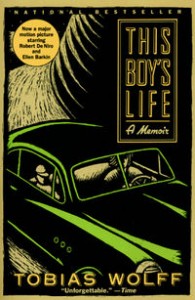
This Boy’s Life

01_This_Boy's_Life_(Book)I tackled reading Tobias Wolff’s This Boy’s Life with a different gusto then I did with Andrew Pham’s Catfish and Mandela.  Paying attention to Wolff’s writing techniques and styles, I trusted my green highlighter to illuminate his writing prowess.  So after finish reading the book, I started to review the highlighted passages and realized I only had a couple.  How could this be?  I started to become frustrated that I had not paid more attention to what I was reading.  I was mentally kicking myself when it dawned on me: Wolff is such a brilliant writer that he got me to detour from my objectives and just pay attention to only his story.  So the question remains, how did he accomplish this?

In answering this question, I asked myself two questions: What is the thing and what is the other thing?  The thing is a coming of age memoir about a boy struggling to find himself.  The other thing is the taxing question of identity, alienation and escapism.  After these two revelations, other questions begin to surface.  How did Wolff manage to convey the thing and the other thing in his writing?  What writing techniques did he use?  How did he manage to detour me from my academic dissection to just enjoying the book?

Most notably, Wolff’s writing is simple but wittily composed.  In fact, there are no major dramatic plot twists or scenes in the book.  There are no far-fetched, grandiose similes or metaphors delving into the existential realms of identity, alienation and escapism.  Instead he uses a direct approach with uncomplicated, clever prose to recount his childhood.  He manages to make the memoir read like a novel.  Even though the time frame starts in the 1950’s, the narrative voice is young and contemporary.  This is important because it makes the reader feel like they are directly inside his character’s mind.  If the voice had been passive and reflective, in other words, older, then the tone of this book would have dramatically changed.  The times he changes to a more contemplative voice, the tone suddenly becomes more remorseful and regretful. (p. 27 and 121).

He establishes a youthful tone by referencing popular trends associated with adolescence.  As a child, Wolff’s character is preoccupied with guns and warfare.  Most young boys share the same fascination.  Wolff makes sure to emphasize that his first gun is his mother boyfriend’s, Roy, childhood gun, a Winchester .22 rifle, Roy had carried it when he was a boy and it was still as good as new.  (p.23)  Then the manner in which he builds a fortress and targets passersby that come within his sniper range all conjure images of a young boy playing soldier.  (p.24-26)  Even as Wolff transitions from pubescence to adolescence, he still reminds the reader that his character is still young by referencing The Mickey Mouse Club.  When Wolff and his friends watched the show, they lost their pretend grown-up demeanors and reverted back to being kids, We surrendered.  We joined the club.  Taylor forgot himself and sucked his thumb, and Silver and I let him get away with it. (p.44)  Then as a teenager, Wolff details his character’s youth by describing his inexperience, “when they discovered that I’d never been drunk and still had my cherry. ” (p. 184) By simply showcasing youthful anecdotes, the tone of the book stays young and contemporary.  I felt as though I was living out the same experiences alongside Wolff.  This made the reading light and palpable.

One technique that I noticed Wolff used to change his direct voice to a more passive voice is his use of quotation marks.  For example, he has a section where he and Roy discuss the possibility of a little brother.  Wolff uses quotations at the beginning and the end of the dialogue but noticeably absent in the middle. (p. 29)  He does this again in a conversation with his mother after their first visit with Dwight. (p. 67)  Although very subtle, it made me wonder why he would choose to employ this technique and what purpose it served.  By omitting the quotation marks, I believe Wolff wanted the reader to understand how removed he was from the conversation.  The reader feels how distant Wolff felt at that moment.  Wolff wanted to convey insincerity in his response, the same way we answer a question just to appease the person asking the question.  And in these paragraphs, Wolff does just that.  This technique is very clever and in my opinion, draws the reader deeper into the character’s thought process.  Just by removing the quotation marks in the middle of the conversation, Wolff is able to convey a mood without breaking the rhythm or pace.  The conversation continues but the reader can now visualize subtle inflections in the voice.

The most impressive aspect of Wolff’s writing is his consistent emphasis on his struggle to find his identity and his desperate need to escape, physically and mentally, the world around him.  As I mentioned earlier, Wolff doesn’t use any convoluted, complex metaphors to describe this struggle.  It’s straightforward and honest.  So honest, in fact, Wolff tells the reader on several occasions he is a liar and a thief. (p.62,133)  Wolff skillfully supplements these declarations with poignant examples throughout the book.  He layers these examples one after another so the reader has no doubt to the central struggle of the book.  Every story relates to the other thing.  He doesn’t digress.  His writing is focused and centered.

The main prevailing thought I am left with after reading Wolff’s book is that good writing doesn’t have to be complicated and convoluted.  Good writing is beautiful constructed sentences simply organized to give the reader a clear view of the message the writer is trying to convey.

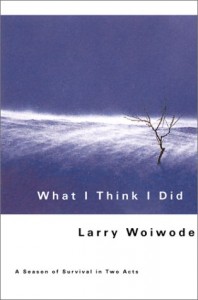
What I Think I Did

41CPSC1ESTL

This is not an actual review but a question posed to me about Woiwode’s experience as a novice writer in his book, What I Think I Did.

As a novice writer, I felt such kinship reading about Woiwode’s struggles and triumphs as a writer.   There are two statements Woiwode writes that encapsulate the hurdles of a young writer,  because the search for words in a beginning writer is as elusive as the search for physical expression (p.209) and What a writer often needs, and especially a beginner, is an answer to technical difficulties. (p.259)  Woiwode definitely got an amen from me as I read those passages.  I find that as I write, or in many cases try to write, I am searching for those words that easily slip off my tongue but find difficulties finding their way home on a blank page.  Forget horror movies, a blank page is the scariest thing for me.  Then there are the questions that creep up, the technical ones.  I can see the image in my head but how do I translate that image to words with the same technicolor magic?   I feel that I often overkill with details and as Scouffas tells Woiwode I over-reach.  But on the flip side, I feel that if I simplify things then I’m losing the intensity of the scene.

I think we all unilaterally regressed back when we read the passage about Woiwode’s experience of rejection when he turned in his first writing submission.  I’m breathless, as eager amateurs are, though they have the confidence of peacocks in displaying themselves€  (p.124)  It’s doesn’t matter whether it’s your first rejection or your tenth one, the sting still hurts.  Even as a more experienced writer, Woiwode received harsh but critical reviews, Larry, either my judgment is failing me or this the worst thing you’ve ever written.  (p. 186)  Ouch.  But as the old adage goes, what doesn’t kill us, makes us stronger.  I could write a book on rejection and feelings of inadequacies.  Hmmm…

I think the best advice given to Woiwode on learning how to write is the ever-present question, Isn’t there a simpler way of saying that. (p.259)  For me, this has become my mantra, my chant, and my meditation.  As I am learning the nuances of good writing, I find that the Zen approach to writing, less is more, is pervasive.  You don’t have to look no further then Tobias Wolff’s This Boy’s Life for a beautiful example.  What I’m struggling with is finding the balance, trying to get my point or the image across like a haiku but without losing the intensity of emotions.  More often than not, I feel as I edit my work, I feel as if I losing my children in the process.  I just got to learn to let go.

server crawl test .